
To Do Your Best Work, Use the 85% Rule
Take it slow to achieve greater things

I heard an anecdote that transformed the way I work.
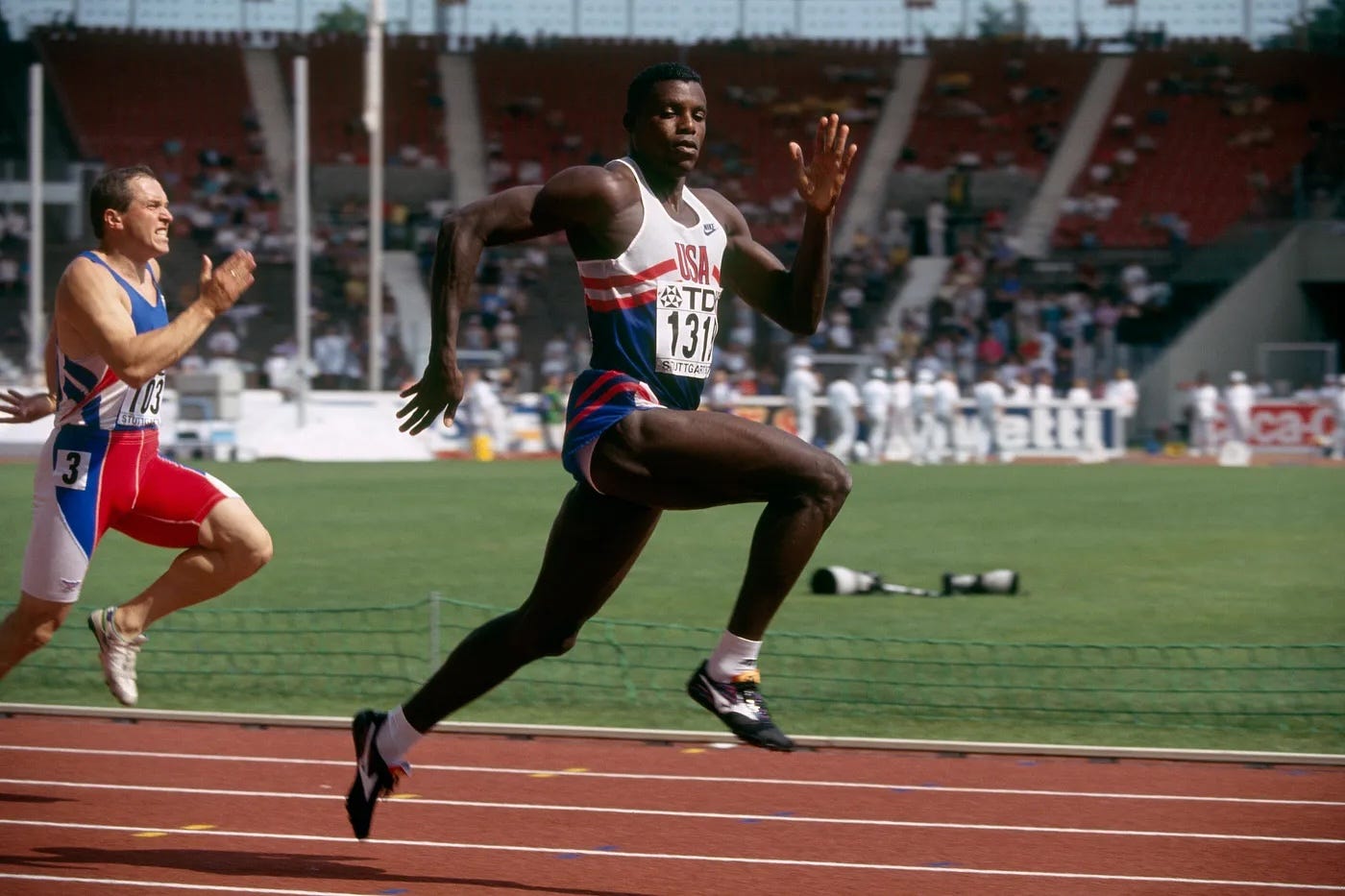
It was an episode of The Tim Ferris Show, and Hugh Jackman, a guest, was recounting a story about a sprint coach who was fascinated by Carl Lewis, the legendary track and field star who’s won nine Olympic gold medals.
The coach couldn’t understand why Lewis would always be in last or second-to-last place after the first 40 meters but then go on to win the 100-meter sprint.
Some people assumed that Lewis was simply a slow starter who ramped up speed in the end. But after watching the race footage from a different angle, the coach found this wasn’t the case. Jackman explained:
What he realized Carl Lewis did at the 50-meter mark, 60-meter mark, was that he did nothing. His breathing was exactly the same. His form is exactly the same as had been between meters 25 and 50.
Whereas everyone else starts to push to the end — “Gonna try a little extra harder!” … their face would scrunch up, their jaw would tighten, their fists would start to clench — Carl Lewis stayed exactly the same, and then he would just breeze past them.
This strategy, Jackman noted, became known as the 85% Rule. As a chronic overworker prone to anxiety and burnout, I’ve been using the rule to do better work, find more creative ideas, and chill the hell out.
The trick is to work at 85% capacity rather than 100%.
It can be surprisingly challenging to take your effort down a notch and keep it there — especially right now when so many livelihoods feel precarious. But going full-throttle all the time actually works against you.
When your mind is relaxed, you’re able to produce better, more thoughtful results.
As a writer, I’ve often rushed to crank out story after story to the detriment of the work I put out. A friend once commented on a piece I wrote, saying, “I felt like you were yelling at me in that story, and it really hurt.” Not the best feedback given my goal is to inspire readers to level up their lives.
Get to 85% by identifying what’s essential and trimming out the rest to the extent that you can do so without making life difficult for others.
Decline invitations to things that aren’t good uses of your time.
Take breaks in your day—or in your career.
Find ways to remind yourself to simply slow down.
Here’s another story that helps me when I need that reminder myself: In his book Hell Yeah Or No, author and entrepreneur Derek Sivers describes how his son loves going on mountain adventures, but he would always get carsick on the drive up.
One day, Sivers decided to drive extra slowly. His son kept his lunch, and they were both able to take in the beautiful scenery. The only challenge was that the drivers behind him started to get angry at his speed. So Sivers tried something: He tilted his rearview mirror toward the sky so that he could focus on his own journey.
When you begin working at 85%, you may have to turn your rearview mirror toward the sky. But if you’re in it for the long haul, it’s best to keep yourself below 100. The work you produce in the end will be the work you’re most proud of.
P.S. I'm helping people do their best work in Fearless Money Makers.
When you join before midnight, you also get access to my "Digital Babies Bundle." (Released to celebrate the announcement of my 2nd child)
Here's how you join:
Reply to this newsletter
Say “I’m in for the Baby Bundle.”
I’ll get you the details straightaway
This definitely applies to writing. When I make an effort to come up with a good story, the story ends up average. Creativity comes from boredom, not from effort.
Congratulations on the new baby!
This piece really moved me, thank you for writing it. Tilting the review mirror is a great mind shift and not one I’ve heard before.
It’s tough to keep it at 85%, especially for those of us who spent years being conditioned to work at 100%. Breaking that behavior pattern is real work, but so worth it.